AI in Action 2025: From Chatbots to Cybernetic Teammates and Edge Intelligence
In the dynamic world of artificial intelligence, a pivotal transformation is unfolding. We are rapidly moving beyond the era of AI as a reactive tool for generating text or images. The frontier of innovation in 2025 is defined by systems that don't just answer questions—they accomplish tasks. This shift marks the dawn of a new paradigm where artificial intelligence evolves from a conversational partner into a proactive, executing teammate, reshaping industries and redefining human productivity.
This transition is powered by a convergence of technological leaps: smarter models that can plan and reason, a new generation of specialized hardware, and a deepening integration of AI into the very fabric of business operations and daily life. As these forces align, they are creating an "AI-first" reality, where intelligent systems are becoming indispensable collaborators.
The Rise of the AI Agent: From Assistant to Employee
The most significant trend defining 2025 is the explosive growth of Agentic AI. Think of these not as simple chatbots, but as autonomous "digital employees." Unlike traditional AI that provides an answer and stops, these agents are designed to understand a high-level goal, formulate a multi-step plan, and execute it by leveraging tools, accessing APIs, and making decisions along the way.
Industry leaders have identified 2025 as the "Agent元年" or Agent Year One, signaling the start of mainstream adoption. These agents are transitioning from offering "tool assistance" to fully "task承接" (task undertaking). In practical terms, this means an AI agent can be entrusted to handle a complete process, such as conducting market research by synthesizing recent reports, booking complex travel that aligns with corporate policy, or managing a multi-stage customer onboarding workflow from start to finish.
This shift is fundamentally changing software interaction. The industry focus is moving from achieving high scores on static benchmarks to a new core question: which system can most effectively translate natural language into a series of executable actions within real-world scenarios. Tech giants are racing to embed this capability into operating systems and super-apps, aiming to make the AI agent the primary interface for digital tasks.
The March to the Edge: AI Gets Personal and Private
While powerful models reside in the cloud, a parallel revolution is making AI more intimate, responsive, and secure through "edge computing." A key trend for 2025 is the proliferation of AI-powered hardware—from AI PCs and smartphones with dedicated Neural Processing Units (NPUs) to smart glasses and wearable devices.
The driving force behind this trend is the compelling advantages of local processing: ultra-low latency, enhanced data privacy, and deeply personalized experiences. Running AI models directly on a device means actions happen instantaneously without waiting for a cloud server, sensitive data never leaves your possession, and the system can learn your unique habits intimately.
Major chipmakers and OS developers are building cohesive "cloud-edge-device" ecosystems. Apple, Qualcomm, and Huawei, for example, are creating infrastructures where complex model training occurs in the cloud, but refined, efficient models operate on your personal devices. This specialization is leading to a new wave of AI-optimized semiconductors, with investment in dedicated AI chips for servers and edge devices seeing significant growth. The message to consumers and enterprises is clear: hardware without native AI capability is becoming obsolete.
AI as the Universal "Amplifier" of Innovation
Perhaps the most profound insight for 2025 is that AI's greatest impact may not be as a standalone technology, but as a force multiplier for every other frontier field. Leading analyses position AI as the foundational "amplifier" that accelerates progress across the entire technological spectrum.
This amplifier effect is visible everywhere:
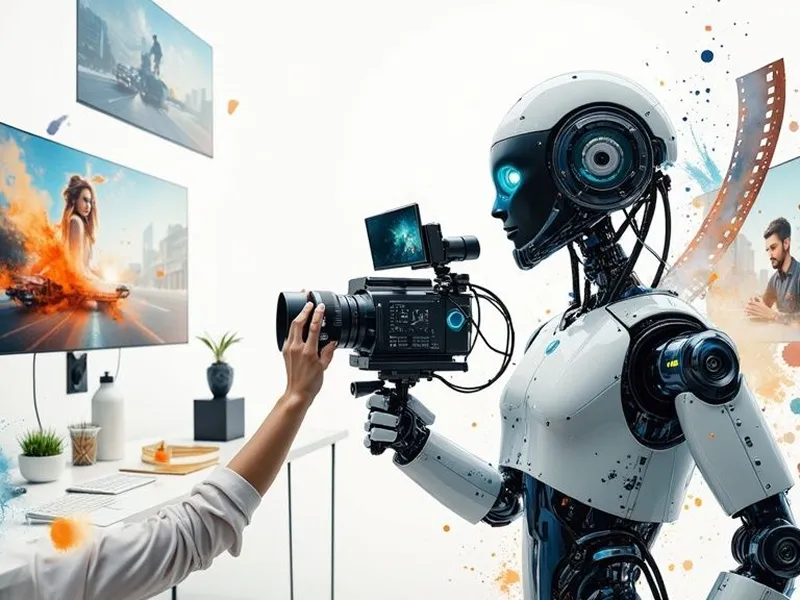
- In Robotics and "Embodied AI": AI agents are providing the "brains" for robots. By combining Agentic AI with advanced robotics, we are moving toward "cybernetic teammates" that can perceive, reason, and act in the physical world. This is accelerating the commercialization of robots for tasks like sorting, assembly, and logistics.
- In Scientific Discovery: AI is revolutionizing research. Models are now used to predict complex outcomes, from the properties of new materials to genetic mutations in medicine, drastically shortening R&D cycles and enabling the emergence of "AI scientists".
- In Sustainability: AI algorithms are critical for optimizing complex systems like smart power grids, managing the integration of renewable energy, and improving efficiency in industrial processes from manufacturing to logistics.
This interconnected growth means that breakthroughs in AI directly fuel advances in biotech, energy, mobility, and beyond, creating a synergistic cycle of innovation.
From Theory to Practice: AI's Industrial Blueprint
The true test of these trends is their application in the complex, high-stakes environments of global industry. The narrative for 2025 is dominated by successful, large-scale deployments that move beyond pilots to core operations.
Leading enterprises are demonstrating how to achieve this integration. For instance, China's FAW Group, a automotive manufacturing giant, has implemented a transformative "业务单元+AI" (Business Unit + AI) methodology. Instead of forcing existing business processes to fit a generic AI model, they broke down operations—like financial treasury, HR payroll, and smart logistics—into granular "business units." They then fused these with AI, creating an ecosystem of "digital employees" that automate complex, cross-departmental workflows. The result has been exponential gains in efficiency, such as achieving "second-level" salary disbursements and a 20% improvement in logistics scheduling efficiency.
Similarly, in the petrochemicals sector, Yunnan Yuntianhua Co. has leveraged a digital twin platform powered by an AI "neural center" (the Yuanbrain KOS) to optimize its entire production chain. By applying AI algorithms to pricing, production scheduling, and quality control, they reduced product changeover losses by 40% and increased pricing forecast accuracy from 68% to 85%.
These cases underscore a critical lesson for 2025: winning AI strategies are not about technology for its own sake. They are about a deep understanding of industrial pain points and delivering reliable, measurable, and systematic solutions. Companies are building proprietary, industry-specific datasets and models to gain a sustainable competitive edge.
Navigating the 2025 AI Landscape: Key Considerations
As organizations seek to harness these trends, several focal points emerge:
- The Cost of Intelligence: As AI agents undertake longer, more complex tasks, the consumption of computational resources (often measured in tokens) is expected to increase by one to two orders of magnitude. This makes inference efficiency—the cost and speed of running trained models—a primary battleground for commercial success. Innovations in model compression, specialized inference hardware, and software optimization are crucial.
- The New Human Role: The proliferation of AI agents is reshaping the workforce. The human role is evolving from being a "manual producer" (e.g., writing every line of code, drafting every report) to becoming a "task designer and validator"—the one who sets objectives, oversees AI-executed workflows, and applies critical judgment to the results. Upskilling for this new collaborative dynamic is essential.
- The Strategic Infrastructure: Success is increasingly tied to "AI-ready" infrastructure. This goes beyond just compute power to encompass unified data platforms that break down silos, tools for building and managing multiple AI agents, and robust frameworks for security and governance. Companies excelling in 2025 are those treating data and AI orchestration as a core strategic asset.
Conclusion: The Age of Execution
The overarching theme for artificial intelligence in 2025 is the shift from passive intelligence to active utility. The technology is maturing from a fascinating novelty into the operational backbone of businesses and a proactive ally in everyday life. The convergence of Agentic AI, edge computing, and its role as a universal innovation amplifier is creating unprecedented opportunities for efficiency, discovery, and growth.
For businesses and individuals alike, the imperative is clear: engage with this transition proactively. Experiment with agentic workflows, evaluate edge-AI hardware for privacy-sensitive tasks, and explore how AI can amplify your core projects. In 2025, the competitive advantage will belong not to those who merely understand AI, but to those who most effectively partner with it to get things done.